Your Face, Your Voice, Your Rights: The Rise of the Digital Replica
AI can now recreate a performer’s face, voice and performance with startling accuracy. In the UK, there is still no single likeness right giving talent complete control, making contractual protection increasingly important.
A performer used to give a performance. Increasingly, they may also be creating an asset.
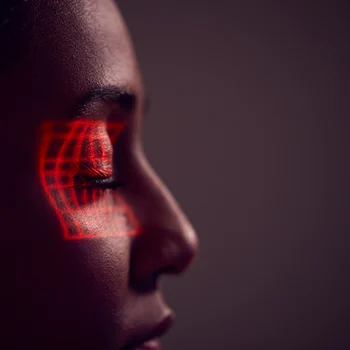
A facial scan, a set of voice recordings or sufficiently detailed footage can now be used to build a digital version of an individual capable of appearing in material that the individual never actually performed. A voice can be made to speak new words. A face can be inserted into new scenes. A performance can be translated, altered, extended or potentially recreated long after the original engagement has ended.
That technology has legitimate and valuable uses, from visual effects and dubbing to accessibility and reducing the need for dangerous physical work. But it changes the commercial significance of the permissions given when talent signs a contract or steps into a scanning rig.
The important question is no longer simply: what are we recording today? It is also: what could this material enable tomorrow?
There is no general UK “likeness right”
The starting point is important. English law does not currently give an individual a general proprietary right over their face, voice or identity.
The Court of Appeal made the position clear in Fenty v Arcadia, the Rihanna/Topshop case: there is no standalone English “image right” allowing a celebrity simply to control every use of their name or image. Rihanna succeeded in passing off because the particular circumstances created a misleading impression of endorsement — not because she owned her appearance.
Digital replicas therefore engage a patchwork of different rights.
Copyright may protect the photograph, film, recording, script or other underlying material used to create a replica. But copyright protects works, rather than personality itself. The relevant copyright may also belong to a photographer, producer or other rights holder rather than the person depicted.
Performers’ rights under the Copyright, Designs and Patents Act 1988 can give performers control over recording and certain subsequent exploitation of qualifying performances. But they are tied to the performance and recordings of it. The Government’s March 2026 review specifically recognised the difficulty: where AI creates a genuinely new synthetic performance rather than reproducing a protected recording, existing performers’ rights may not provide the answer. Nor will every presenter or contributor necessarily fall within the statutory definition of a “performance”.
Passing off may assist established talent where an unauthorised replica falsely suggests endorsement, association or commercial approval. It requires goodwill, misrepresentation and damage, however. It is not a universal right to stop imitation.
Privacy and data protection law add another layer. An identifiable person's face or voice can constitute personal data, and the creation, storage and use of digital replicas may involve substantial processing of that data. Biometric data receives additional protection where it is processed for the purpose of uniquely identifying an individual. Importantly, organisations must identify the purpose and lawful basis for each relevant processing activity; the fact that data was lawfully collected for one production does not automatically make every later AI use lawful.
That fragmented legal landscape is precisely why contract drafting matters so much.
Consent to a scan is not consent to everything
A production may have a perfectly legitimate reason to scan a performer: perhaps to create a digital double for a stunt, complete a VFX shot or enable continuity within a particular programme.
The danger lies in turning that specific permission into a general licence.
Equity has highlighted contracts containing language allowing a “simulated likeness” to be used in perpetuity, across media now known or later developed, or even “for any purpose”. Its current guidance recommends identifying in advance whether face, body or voice capture is proposed, what it will be used for, whether AI training is contemplated and how long the resulting data will be retained.
For talent and their representatives, digital-replica provisions should therefore distinguish between creation of the asset and uses of the asset.
A well-defined permission should address the named production and purpose; whether the material can be used for conventional VFX, generative AI, voice synthesis, dubbing or model training; the permitted media, territory and duration; whether it may be transferred to distributors, platforms, VFX houses or AI providers; and what happens to the underlying scans, recordings and models once the agreed purpose has ended.
“Future technologies” clauses deserve particular attention. There is no universal rule that an agreement signed before generative AI either does or does not cover AI exploitation: that will depend on the wording, the rights granted and the circumstances. Data protection obligations may also operate independently of the contractual licence.
Where a proposed use is materially different from the purpose for which the material was originally captured, the commercially sensible approach is fresh, informed consent.
Approval, payment and the right to say no
Consent is only one part of the negotiation.
A digital replica can potentially generate value repeatedly without requiring the performer to return to a studio. That makes remuneration models important. Depending on the production, the structure may include an initial capture fee, additional payment for agreed uses and further payment or renegotiation if the replica is subsequently deployed in new productions, campaigns, territories or media.
Approval and consultation provisions can also matter. A performer may be comfortable with a digital double completing a stunt but not with an AI-generated version of themselves delivering new dialogue, endorsing a product or appearing in a context they would never have accepted in person.
The contract should also address security and onward transfer. Once a high-quality voice model or digital likeness exists, loss of control over the underlying data can be much more serious than an ordinary production leak.
For producers, specificity is useful too. Clear consent and chain-of-title documentation reduce uncertainty for commissioners, distributors, insurers and technology suppliers. Broad drafting may appear attractive at the outset, but ambiguity over whether a valuable digital asset can actually be exploited is rarely helpful later.
UK practice is beginning to change
Industry agreements are already moving ahead of legislation.
In June 2026, Equity members approved a new agreement with TAC for television productions commissioned for S4C. Equity described it as one of the first UK television collective agreements to establish specific AI protections, including the principle that performers’ voices, likenesses and performances should not be digitally recreated, reused or exploited without prior informed consent and appropriate contractual safeguards.
The wider Equity–Pact negotiations covering much of UK film and television have been more contentious. In December 2025, 99.6% of voting performers in an indicative Equity ballot said they were prepared to refuse digital scanning to secure adequate AI protections. As at mid-2026, Equity said there were still no AI protections in the existing Equity–Pact agreement and was seeking to use the strengthened US settlement as a benchmark.
Government policy is moving too, although legislation has not yet caught up. The Government’s 18 March 2026 Report on Copyright and Artificial Intelligence concluded that existing law does not cover every situation in which a digital replica is made without consent and expressly proposed exploring whether the UK should introduce a new digital-replica or personality right.
It committed to a further consultation. Government material updated on 29 July 2026 was still describing that consultation as something it would launch, so at the time of writing the important point is that reform remains under consideration rather than enacted law.
The international direction of travel
The United States provides a useful indication of where contractual practice may be heading.
California legislation signed in 2024 restricts certain performer contracts permitting digital replicas unless the intended use is described with reasonable specificity and specified representation requirements are met.
SAG-AFTRA’s new TV/Theatrical agreement, effective from 1 July 2026, goes further than its 2023 deal, with protections covering digital replicas created without a dedicated scan, dubbing, biometric data, security, transfer of replicas and synthetic performers. These terms do not become English law simply because US productions use them, but global studios and talent increasingly operate across both systems, so they influence expectations in UK negotiations.
The EU is moving on transparency as well. From 2 August 2026, Article 50 of the EU AI Act introduced disclosure obligations for certain AI-generated and manipulated material, including deepfakes. That is primarily a transparency regime rather than a personality right, but it is relevant to UK producers and platforms operating in the European market.
Treat the digital self as a valuable right
The technology is moving faster than the legal categories designed to regulate it.
For talent, that means avoiding the assumption that the law will necessarily provide a simple remedy after the event. For producers, it means avoiding the opposite assumption: that possession of footage, a voice recording or a scan automatically brings an unrestricted right to generate new performances from it.
The safest commercial approach is to treat digital-replica rights as something that should be identified, scoped and negotiated deliberately.
What is being captured? What can it be used for? For how long? By whom? Can it train an AI system? Can it generate entirely new material? Does the individual have approval or consultation rights? What additional payment follows further exploitation? And what happens when the original permitted use ends?
A face and a voice may not yet constitute a single property right under UK law. Commercially, however, they have never been more capable of becoming reusable assets — which makes the wording around them increasingly important.